Heiken Ashi - Хейкин-Аши

The Heiken Ashi indicator: what is it and how to use it

Heiken Ashi - Хейкин-АшиHeikinAshi is a Japanese trading indicator and a type of financial chart, the name of which translates as “medium bar”.

Heikin-Ashi charts are similar to candle charts, but differ in a smoother and smoother appearance, since they capture a range of price movements, rather than each individual price fluctuation, as traditional candles do.

The indicator was developed in the 1700s by Munehisa Homma, who is also the author of candle charts.

These charts are actively used by traders and investors to analyze and predict price movements.

Many traders use multifunctional variants of price charts in their practice, such as Japanese candlesticks and bars, which provide extensive information about the movement of quotations:

they create a visual picture of the market situation at each time interval; They allow you to predict price behavior in the near future based on the recognition of candlestick patterns (which also applies to bars).

The accuracy of the analysis and forecasts depends on various factors, including the level of market noise. In trading systems, participants tend to filter this noise using additional tools such as trend indicators. Romanian financial analyst Dan Valcu has proposed a new way to display quotation charts, which is initially able to eliminate high-frequency fluctuations in the market.

This alternative method is called Heiken Ashi and is distinguished by its method of constructing price bars. Its main feature is the use of prices not only for the current, but also for the previous trading period.

Visually, candlesticks on this indicator are almost identical to traditional Japanese ones:

they have a body limited by the calculated opening and closing prices (Open and Close);
they can be ascending (Open < Close), traditionally white, or descending (Open > Close), red;
they can have upper and lower shadows when the highs and lows of the candle go beyond the body

Building Heiken Ashi Candles

Heiken Ashi (HA) candlesticks are a method of visualizing price movement that uses averaged values to smooth out market noise. This approach allows traders to better assess the current market situation and identify trends. Below are the basic formulas used to build Heiken Ashi candles:

The closing price of the candle in the interval with the ordinal number i is equal to the Weighted Price:

Close_ha[i] = (Close[i] + Open[i] + High[i] + Low[i]) / 4.

The opening price is defined as the average price on the previous Heiken Ashi candle:

Open_ha[i] = (Open_ha[i-1] + Close_ha[i-1]) / 2.

The maximum represents the largest of the opening and closing prices of the current HA candle and the maximum of the current period of the candle chart:

High_ha[i] = Max(Open_ha[i], Close_ha[i], High[i]).

The minimum price is determined similarly, but uses the lowest value and minimum of the current period of the candlestick chart:

Low_ha[i] = Min(Open_ha[i], Close_ha[i], Low[i]).

As a result, the following conclusions can be drawn:

The sequence of Open prices in Heiken Ashi candles is equivalent to the average for two periods with a shift of one bar. This avoids the use of integral formulas, which in turn reduces the delay of the indicator in relation to the price chart.

The body of the Heiken Ashi candle reflects the difference between the real weighted price of the current period and the average price of the previous one. This parameter can be interpreted as the strength of the current price momentum.

Candle shadows are formed when the real highs (High) or lows (Low) exceed the calculated values.

This chart format allows you to quickly and effectively assess the market situation in just one glance.
How to interpret the Heiken Ashi chart

The analysis of the Heiken Ashi chart is based on the specifics of candle formation. Here are the key points for understanding their behavior:

  • A continuous series of candlesticks in one direction indicates the presence of a stable trend.
  • A decrease in the length of the candle bodies may indicate a decrease in the interest of market participants in the current movement, a weakening of the price impulse and an increase in the probability of correction.
  • Candles that do not have shadows directed against the main body show a strong and well-defined tendency.
  • The shadow of the candle, directed in the opposite direction from the body, indicates the growing interest of traders in opening positions against the current trend.
  • Short candlesticks (so-called doji) with long shadows in both directions indicate a high probability of changing the direction of movement or going into a sideways movement (flat).

How to use the HeikenAshi indicator

The Heiken Ashi indicator is included in trading systems as an effective tool for trend analysis. However, its use has its own characteristics.

In particular, for MT4, which is widely used by many forex traders, and for MT5, which is gaining popularity in stock trading, traders have to resort to third-party indicators. The creator of the platform, MetaQuotes, does not yet consider it necessary to add Heiken Ashi as a separate type of graph or include it in a set of standard analysis tools.

In this terminal, Heiken Ashi candles are built on top of one of the standard price charts. This is not very convenient, since the imposition of candles (if Japanese candles are selected as a working option) complicates the perception of information.

There are several ways to improve the display quality:

In the color scheme settings, set the color of the price chart in the same way as the background. In this case, the trader will receive a clean Heiken Ashi chart in the quotation window. However, most of the standard indicators from the delivery package will not be able to work with it. Instead, you will have to download and connect (or write yourself) extended third-party versions that can work with the prices of this chart.

Build a bar price chart. It has almost no effect on the display of Heiken Ashi candlesticks and shows the characteristic prices of periods (Open, Close, High, Low).

Build a price chart in the form of a line (it is drawn at the closing prices of periods). This is convenient for those who build their trading systems with reference to the end of the previous bar and the beginning of the current one.

Place the Heiken Ashi chart at the bottom of the price chart. In this case, the trader gets access to all the information of the standard chart and the results of its processing by this indicator. Such versions of Heiken Ashi can also be found from third-party developers.

The situation with the indicator for QUIK, which has become the standard among Russian traders and investors, is even more complicated. The creator of the platform also does not respond to requests from users to include Heiken Ashi in a set of standard representations of the price chart. The built-in development tools do not allow the formation of candlestick graphic objects on the chart. Therefore, third-party indicators in Lua (the programming language for QUIK) often have rather strange shapes that are inconvenient to work with. The situation can be improved by indicators with alerts that signal significant changes in the behavior of the Heiken Ashi chart. However, such an analysis using machine methods is complex and, accordingly, difficult to implement.
Trading signals and recommendations for working with Heiken Ashi

The Heiken Ashi indicator is often considered as a tool for determining the trend, but experienced traders also use it to receive trading signals:

The first full-bodied candle (rising or falling) with a single shadow in the direction of movement. This may signal the beginning of a trend movement, both upward and downward. After the appearance of such a candle, traders are advised to look for entry points into the market in accordance with the direction indicated by the Heiken Ashi candle.

A candle with a long body and both shadows. This may be a signal of the beginning of a correction. In this case, it is recommended to close some of the positions opened in the direction of the trend, or move the Stop Loss order.

A doji candle with a short body and long shadows. This is considered a sign of the end of the trend or its reversal. Traders are advised to close open positions and look for entry points in the opposite direction.

Experienced traders rate the signals received with the help of Heiken Ashi as less reliable, which implies the need for confirmation from other sources.

A simple strategy is that a signal is considered valid if it is confirmed on at least the next two candlesticks. For example, a position is opened on the third full-bodied candle of the same color as the signal one. However, it should be borne in mind that due to the delay of the Heiken Ashi, the trader may miss a significant part of the movement.

In combination with Heiken Ashi, various indicators such as Stochastic or MACD oscillators are often used. In this case, the oscillators serve as a source of signals, and the Heiken Ashi candles confirm them. You can also use non-indicator systems such as Price Action or traditional candlestick analysis.

Interesting approaches:

Using the Heiken Ashi multi-time frame indicator, which allows you to recognize long-term trends in the older periods of the chart.
The use of candlesticks based on the data of not two, but a larger number of adjacent bars, which increases the lag, but improves the filtering ability.
The calculation of the prices of Heiken Ashi candlesticks is not based on the real prices of periods, but on their values, smoothed using moving averages.

In general, the Heiken Ashi chart is a useful tool for analyzing the market situation and forecasting price movements. It helps to smooth out market noise, is easy to use and is suitable even for novice traders.

Heiken Ashi - Хейкин-Аши

RU: Индикатор Хейкен Аши: что это и как использовать

Heiken Ashi - Хейкин-АшиХейкин-Аши — это японский торговый индикатор и тип финансового графика, название которого переводится как “средний бар”.

Графики Хейкин-Аши схожи с графиками свечей, но отличаются более плавным и сглаженным внешним видом, поскольку они фиксируют диапазон ценовых движений, а не каждое отдельное ценовое колебание, как это делают традиционные свечи.

Индикатор был разработан в 1700-х годах Мунехисой Хоммой, который также является автором графиков свечей.

Эти графики активно используются трейдерами и инвесторами для анализа и прогнозирования ценовых движений.

Многие трейдеры в своей практике используют многофункциональные варианты ценовых графиков, такие как японские свечи и бары, которые предоставляют обширную информацию о движении котировок:

  • они создают наглядную картину рыночной ситуации на каждом временном интервале;
  • позволяют прогнозировать поведение цен в ближайшем будущем, основываясь на распознавании свечных моделей (что также применимо и к барам).

Точность анализа и прогнозов зависит от различных факторов, включая уровень рыночного шума. В торговых системах участники стремятся фильтровать этот шум с помощью дополнительных инструментов, таких как трендовые индикаторы. Румынский финансовый аналитик Дан Валку предложил новый способ отображения графиков котировок, который изначально способен устранять высокочастотные колебания на рынке.

Этот альтернативный метод называется Heiken Ashi и отличается своей методикой построения ценовых баров. Главная его особенность заключается в использовании цен не только текущего, но и предыдущего торгового периода.

Визуально свечи по этому индикатору практически идентичны традиционным японским:

  • они имеют тело, ограниченное вычисленными ценами открытия и закрытия (Open и Close);
  • могут быть восходящими (Open < Close), традиционно белого цвета, или нисходящими (Open > Close), красного цвета;
  • могут иметь верхние и нижние тени, когда максимумы и минимумы свечи выходят за пределы тела

Построение свечей Хейкен Аши

Свечи Хейкен Аши (HA) представляют собой метод визуализации ценового движения, который использует усредненные значения для сглаживания рыночного шума. Этот подход позволяет трейдерам лучше оценивать текущую рыночную ситуацию и выявлять тренды. Ниже представлены основные формулы, используемые для построения свечей Хейкен Аши:

Цена закрытия свечи на интервале с порядковым номером i равна взвешенной (Weighted Price):

Close_ha[i] = (Close[i] + Open[i] + High[i] + Low[i]) / 4.

Цена открытия определяется как средняя цена на предыдущей свече Heiken Ashi:

Open_ha[i] = (Open_ha[i-1] + Close_ha[i-1]) / 2.

  • Максимум представляет собой наибольшую из цен открытия и закрытия текущей свечи HA и максимума текущего периода свечного графика:

High_ha[i] = Max(Open_ha[i], Close_ha[i], High[i]).

  • Минимальная цена определяется аналогично, но использует наименьшее значение и минимум текущего периода свечного графика:

Low_ha[i] = Min(Open_ha[i], Close_ha[i], Low[i]).

В результате можно сделать следующие выводы:

  • Последовательность цен открытия (Open) в свечах Хейкен Аши эквивалентна средней за два периода с сдвигом на один бар. Это позволяет избежать применения интегральных формул, что в свою очередь снижает запаздывание индикатора по отношению к ценовому графику.

  • Тело свечи Хейкен Аши отражает разницу между реальной взвешенной ценой текущего периода и усредненной ценой предыдущего. Этот параметр можно интерпретировать как силу текущего ценового импульса.

  • Тени свечей формируются в тех случаях, когда реальные максимумы (High) или минимумы (Low) превышают рассчитанные значения.

Такой формат графиков позволяет быстро и эффективно оценивать рыночную ситуацию всего за один взгляд.

Как интерпретировать график Heiken Ashi

Анализ графика Хейкен Аши основывается на специфике формирования свечей. Вот ключевые моменты для понимания их поведения:

  1. Непрерывный ряд свечей в одном направлении свидетельствует о наличии устойчивого тренда.
  2. Уменьшение длины тел свечей может указывать на снижение интереса участников рынка к текущему движению, ослабление ценового импульса и увеличение вероятности коррекции.
  3. Свечи, не имеющие теней, направленных против основного тела, демонстрируют сильную и четко выраженную тенденцию.
  4. Тень свечи, направленная в противоположную сторону от тела, свидетельствует о растущем интересе трейдеров к открытию позиций против текущего тренда.
  5. Короткие свечи (так называемые доджи), обладающие длинными тенями в обе стороны, указывают на высокую вероятность изменения направления движения или перехода в боковое движение (флэт).

Как использовать индикатор Хейкен Аши

Индикатор Хейкен Аши включается в состав торговых систем как эффективный инструмент для анализа трендов. Однако его использование имеет свои особенности.

В частности, для MT4, который широко используется многими форекс-трейдерами, и для MT5, набирающего популярность в биржевой торговле, трейдерам приходится прибегать к сторонним индикаторам. Создатель платформы, компания MetaQuotes, пока не считает нужным добавлять Хейкен Аши как отдельный тип графика или включать его в комплект стандартных инструментов анализа.

В данном терминале свечи Хейкен Аши строятся поверх одного из стандартных ценовых графиков. Это не совсем удобно, так как наложение свечей (если выбраны японские свечи в качестве рабочего варианта) усложняет восприятие информации.

Для улучшения качества отображения можно воспользоваться несколькими способами:

  1. В настройках цветовой схемы задать цвет графика цен так же, как и фон. В этом случае трейдер получит чистый график Хейкен Аши в окне котировок. Однако большинство стандартных индикаторов из пакета поставки не смогут работать с ним. Вместо этого придется скачать и подключить (или написать самостоятельно) расширенные сторонние версии, которые могут работать с ценами этого графика.

  2. Построить баровый ценовой график. Он практически не влияет на отображение свечей Хейкен Аши и показывает характерные цены периодов (Open, Close, High, Low).

  3. Построить ценовой график в виде линии (она проводится по ценам закрытия периодов). Это удобно для тех, кто строит свои торговые системы с привязкой к окончанию предыдущего бара и началу текущего.

  4. Разместить график Хейкен Аши в нижней части ценового графика. В этом случае трейдер получает доступ ко всей информации стандартного графика и результатам его обработки данным индикатором. Такие версии Хейкен Аши также можно найти у сторонних разработчиков.

Ситуация с индикатором для QUIK, ставшего стандартом среди российских трейдеров и инвесторов, еще более сложная. Создатель платформы также не реагирует на просьбы пользователей включить Хейкен Аши в набор стандартных представлений ценового графика. Встроенные средства разработки не позволяют формировать свечные графические объекты на чарте. Поэтому сторонние индикаторы на Lua (язык программирования для QUIK) часто имеют довольно странные формы, с которыми неудобно работать. Ситуацию могут поправить индикаторы с алертами, сигнализирующие о значительных изменениях в поведении графика Хейкен Аши. Однако такой анализ с использованием машинных методов сложен и, соответственно, трудно реализуем.

Торговые сигналы и рекомендации по работе с Хейкен Аши

Индикатор Хейкен Аши часто рассматривается как инструмент для определения тренда, однако опытные трейдеры также используют его для получения торговых сигналов:

  1. Первая полнотелая свеча (растущая или падающая) с единственной тенью в направлении движения. Это может сигнализировать о начале трендового движения, как восходящего, так и нисходящего. После появления такой свечи трейдерам рекомендуется искать точки входа в рынок в соответствии с направлением, указанным свечой Хейкен Аши.

  2. Свеча с длинным телом и обеими тенями. Это может быть сигналом о начале коррекции. В данном случае рекомендуется закрыть часть позиций, открытых в направлении тренда, или переместить ордер Stop Loss.

  3. Свеча доджи с коротким телом и длинными тенями. Это считается признаком окончания тренда или его разворота. Трейдерам рекомендуется закрывать открытые позиции и искать точки входа в противоположном направлении.

Сигналы, полученные с помощью Хейкен Аши, опытные трейдеры оценивают как менее надежные, что подразумевает необходимость подтверждения из других источников.

  • Простая стратегия заключается в том, что сигнал считается действительным, если он подтверждается как минимум на двух следующих свечах. Например, позиция открывается на третьей полнотелой свече того же цвета, что и сигнальная. Однако стоит учитывать, что из-за запаздывания Хейкен Аши трейдер может упустить значительную часть движения.

  • В сочетании с Хейкен Аши часто используются различные индикаторы, такие как осцилляторы Stochastic или MACD. В этом случае осцилляторы служат источником сигналов, а свечи Хейкен Аши подтверждают их. Также можно применять безиндикаторные системы, такие как Price Action или традиционный свечной анализ.

Интересные подходы:

  • Использование мультитаймфреймового индикатора Хейкен Аши, позволяющего распознавать долгосрочные тренды на старших периодах графика.
  • Применение свечей, основанных на данных не двух, а большего числа соседних баров, что увеличивает запаздывание, но улучшает фильтрующую способность.
  • Расчет цен свечей Хейкен Аши не по реальным ценам периодов, а по их значениям, сглаженным с помощью скользящих средних.

В целом, график Хейкен Аши представляет собой полезный инструмент для анализа рыночной ситуации и прогнозирования ценовых движений. Он помогает сгладить рыночный шум, прост в использовании и подходит даже для начинающих трейдеров.

Brad Garlinghouse

Ripple CEO allowed Biden to be defeated in the election due to SEC policy

The policy of SEC Chairman Gary Gensler could lead to Joe Biden’s defeat in the upcoming U.S. presidential election in November. This was stated by Ripple CEO Brad Garlinghouse.

Absolute nonsense coming from @GaryGensler today.

And this slander about “all crypto execs going to jail” from the man who completely missed FTX (and actually cozied up to SBF), and wasn’t even invited to the DOJ announcement about Binance.

If he was really “working for the…

— Brad Garlinghouse (@bgarlinghouse) June 25, 2024

The top manager was outraged by the official’s statements at the Bloomberg Invest summit in New York, where he said that key industry players “are either in prison, or going to jail, or awaiting extradition.”

Garlinghouse called these words “nonsense.”

“And this slander […] from a man who completely skipped FTX (and actually got closer to SBF) and wasn’t even invited to the announcement [by agreement] The Ministry of Justice about Binance. If Gensler had really “worked for the American people,” as he says, he would have been fired long ago. The head of the SEC will lead to Biden losing the election,” the CEO of Ripple added.

Ripple and the SEC have been in litigation since 2020, when the Commission accused Ripple of raising $1.3 billion by selling XP in the form of unregistered securities.

In July 2023, Judge Antonio Torres ruled in favor of the company. The case regarding the institutional sales of XRP by the company continues.

Recall that in May 2024, billionaire investor Mark Cuban said that Gensler’s position on cryptocurrencies could prevent Biden from being re-elected president.

A month later, he repeated his position.

Back in 2023, during a debate with ex-SEC lawyer John Reed Stark, the billionaire said that the regulator was “throwing cryptocurrency under the bus.”

graph

S&P 500 could collapse by 50%

When the stock market bubble bursts and recession sets in Wall Street veteran

Paul Dietrich pointed to a highly overvalued market and cracks in the economy

The S&P 500 could be cut in half when the stock bubble bursts and the U.S. economy plunges into recession, Paul Dietrich believes.

“I believe that the upcoming recession will lead to a deeper decline in the stock market than in 2000 and 2008,” said chief investment strategist B. Riley Wealth Management in his latest monthly commentary.

graph
A graph of the stock market decline and recession. Stocks could collapse by almost 50%, and a recession could come as early as this year, says Paul Dietrich of B. Riley. Yuichiro Chino/Getty Images

Dietrich described in detail the warning signs indicating that stocks are highly overvalued and close to correction. For example, he pointed to the price-earnings ratio in the S&P 500 and the inflation-adjusted Shiller PE ratio, which, excluding past recessions, are at multi-decade highs, as well as the index’s historically low dividend yield of 1.35%.

He also noted that the recent market growth was driven by investor enthusiasm for several stocks, such as Microsoft and Nvidia, and their hopes that the Federal Reserve would lower interest rates later this year, rather than fundamental factors such as rising corporate earnings.

Indeed, Dietrich compared the huge hype around AI to the Internet mania during the dotcom bubble. He also drew attention to the Buffett indicator, which rose to 188% this year – close to the 200% mark, when buying shares, according to Warren Buffett, would mean “playing with fire.”

In addition, the strategist noted that over the past year, the price of gold has jumped by about 20% to record highs. He explained this by saying that institutional investors are buying this safe haven asset because they expect “a serious correction or collapse of the stock market due to wildly inflated stock prices and a slowdown in economic growth.”

As for the economy, Dietrich argues that decades of excessive budget spending and artificially low interest rates have pushed back the recession.

He predicted that rates would remain raised for many years to combat persistently inflated inflation, and the government would be forced to raise taxes to solve the problem of bloated budget deficits, which would lower prices for assets such as stocks and houses and cause an economic downturn.

“No one seems to notice that the economy is cooling, and there are risks to it everywhere,” he said. “I still think there is a high probability that the economy will go into a mild recession this year.”

Dietrich noted that the S&P 500 typically falls by about 36% during a recession, and the index will have to drop 12% from its current level of about 5,450 points to return to the 200-day moving average. Thus, he warned that the index could fall by 48% to 2,800 points – the lowest level since the collapse of Covid in the spring of 2020.

The Wall Street veteran is one of several leading forecasters predicting a worsening stock market and an impending recession. But it is worth noting that Dietrich has been sounding the alarm for several months, but neither the market nor the economy have faced serious problems.

pumpdump

What is Pump & Dump?

What is Pump & Dump?

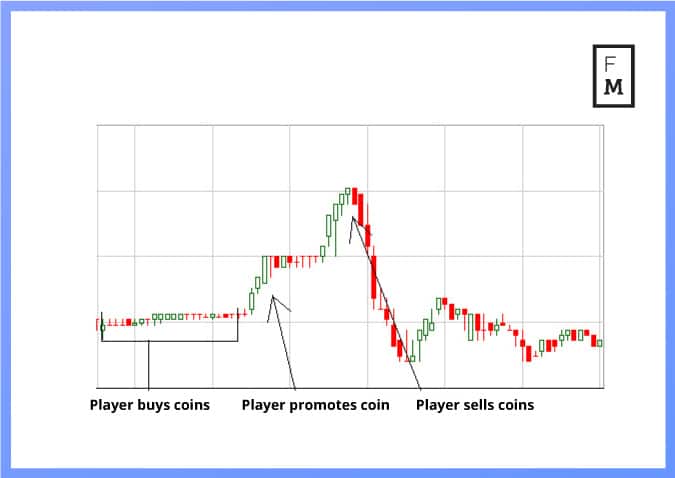
Pump and Dump is a manipulative scheme to increase the cryptocurrency exchange rate with a subsequent price collapse. Large owners of assets artificially increase (“pump up”, pump) their value in order to subsequently sell (“dump”, dump) it is as expensive as possible for small traders. As a result, the value of the asset decreases, and investors lose funds.

The pump & dump scheme originated in the securities market long before the advent of cryptocurrencies. The first documented episode of such fraud was the scam of the British trading company of the South Seas, which at the beginning of the XVIII century inflated the stock price with false promises of profit. This led to the emergence of the so-called South Sea bubble.

Subsequently, pump & dump was widely used in the American market of “junk” or “penny” stocks (cheap securities with low market capitalization) during the Great Depression in the late 20s – early 30s of the XX century. Then brokers sold cheap shares to each other, which led to an increase in demand and an increase in prices, after which the shares were thrown onto the public market. In the United States, such a practice has been declared illegal. The heyday of pump & dump schemes on the stock market occurred in the early 2000s.

Pump & dump has migrated to the cryptocurrency market in an almost unchanged form. This was facilitated by the lack of regulation. Currently, there are about two thousand “junk” cryptocurrencies. Messengers and social networks have a huge audience, so the pump & dump scheme is extremely popular in the crypto market.

Tens of thousands of pumps have been held during the existence of cryptocurrencies. According to experts from Imperial College London, at least two fraudulent schemes of this kind are implemented every day, and the monthly profit of the organizers is on average $ 7 million.

How does Pump & Dump work?

By choosing an exchange and a coin, the organizers buy tokens in small portions so as not to provoke a premature increase in the exchange rate. As a rule, these are little-known cryptocurrencies with low capitalization, popularly known as shitcoins. Sometimes relatively large cryptocurrencies are also used for pump & dump.

After buying the token, the pump begins – its “pumping”. Messengers, news feeds, social networks and exchange chats announce the rapid growth of the exchange rate and inform the name of the exchange platform, where the organizers of the scam place and take large orders for the purchase of a token through their bots, raising its quotation. This is the first wave of the pump.

Most major bitcoin exchanges restrict such activities, and the coins in their listing are rarely suitable for the implementation of the scheme. But there are popular platforms that support more than two hundred coins — they attract scammers in the first place.

False information about partnerships, investments or technological updates are used to warm up buyers. Paid “experts” are joining the disinformation campaign. The “sensational” information is distributed mainly through Telegram channels. At the same time, most of these channels directly report the pump, promising profit.

After that, investors are confident: since they know about the pump in advance, they will be able to earn. In fact, they are already victims, and some of them even pay for subscriptions to such pump channels.

In the case of a successful advertising campaign, the second wave of the pump begins — third-party investors come who independently influence the growth of the exchange rate. Against the background of the hype, the price is rising, the organizers sell tokens at an inflated cost, after which the cryptocurrency exchange rate returns to its original indicators.

What are the types of Pump & Dump?

Cryptocurrency pumps are divided into long-term and short-term.

  • A short-term pump lasts for several hours or even minutes and is used in the case of little-known cryptocurrencies with low capitalization. During the pump, their value soars rapidly, holds positions for a few seconds, after which it falls just as quickly. The financial costs of the organizers of such a pump are relatively low — the “pumping” of the course costs an average of 50 – 60 watts.
  • Cryptocurrencies from the top twenty are selected for a long-term pump. As a rule, it lasts for several days, and the ups and downs of the course occur in several stages. Organizing a pump of large cryptocurrencies requires significant financial costs, so large players or communities of traders are engaged in this.

What are the distinguishing features of Pump & Dump?

  • The revival of stock market activity (the appearance of large buy and sell orders) and the growth of the exchange rate in the absence of positive news;
  • The lack of similar price growth on other exchanges where cryptocurrency is traded;
  • An active cryptocurrency advertising campaign in stock exchange chats, forums, social networks and/or Telegram channels.

Is it possible to make money on the Pump & Dump scheme?

It is almost impossible to make money on a short-term pump: profit is possible only for the organizers, ordinary traders simply do not have time to react.

It is theoretically possible to make money on a long-term pump: a trader can count on profit, however, in this case he has only a few minutes to place an order. Moreover, the probability of losses is equal to the probability of profit.

Most pumps have one predictable feature: after the first collapse, a new short-term growth occurs due to the fact that retail investors are involved in trading. After a trader sells tokens at a loss during the collapse, he can buy them at a minimum and sell them during the second rise.

In no case can you buy coins during the second rise – this is a guaranteed loss. Secondary price peaks are typical only for fairly large coins with a capitalization of at least one million dollars.

Pump & Dump Examples

Parallel Coin

On the eve of November 5, 2019, the price of the ParallelCoin token increased several thousand times in a matter of hours (from $1.50 to more than $ 2,000), which gave users the opportunity to talk about the emergence of a “new bitcoin”. A few hours later, the price returned to the $2 level.

pump-and-dump
pump-and-dump

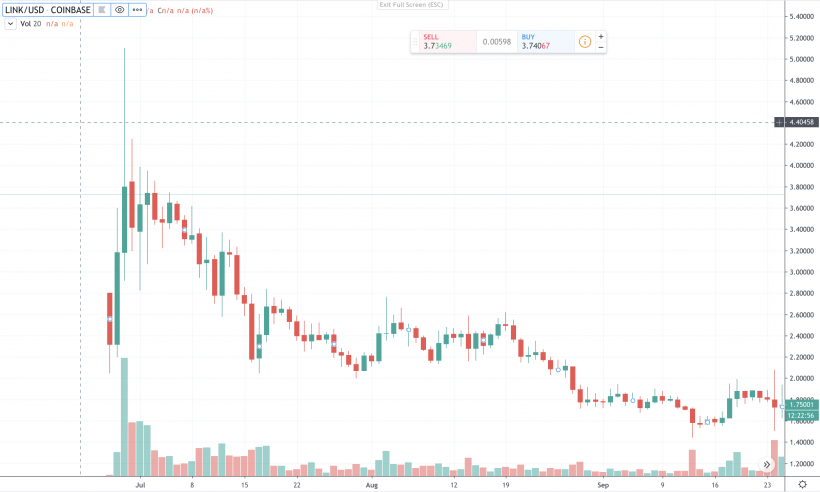
The increase in the price of the LINK token was preceded by messages on Twitter about cooperation: On June 13, 2019, Chainlink announced a partnership with Google Cloud, which confirmed this information. After that, the price of the LINK token increased from $1.19 to $1.93.

On June 26, Chainlink announced that it had included the token in the Coinbase listing, after which the price of the token rose to $ 2.24. On June 28, a pump began: several addresses bought large amounts of LINK on Binance, after which they transferred them through a number of fake addresses. By June 29, LINK’s price had risen to $4.45. According to observers, the daily trading volumes of ChainLink on the Binance exchange at the end of June were artificially inflated. Thus, with a capitalization of only $1.4 billion, this figure amounted to $863 million. The price movement chart for the mentioned period, according to some, looked unnatural, especially considering that volumes in favor of sales were recorded on one of the green candlesticks. There was a possibility that unknown people wanted to provoke FOMO, but could not achieve their goal.

On July 2, the dump phase began: addresses that had previously bought tokens began to dump them, after passing them through a chain of fake addresses. Only one of the addresses sold 4.2 million LINK tokens from July 2 to July 15. On the first day of the “dump”, on July 2, the value of the token dropped to $3.73.

On July 6, a recruitment message was posted on the project’s Twitter page, which, according to some observers, indicated a dump. Following this message, a graph was distributed on social networks, which displayed the estimated sales of 700,000 LINK tokens for each price rebound after reaching a peak at the end of June. After going through a small chain of addresses, these tokens were sold on Binance. Some believed that the announcement of the expansion of the staff was just an attempt to hide the large-scale liquidation of tokens.

By July 15, LINK was already worth $2.79, after which the collapse continued. As of September 16, LINK was worth $1.61: the price has almost returned to the level of mid-June.

E-Coin
E-Coin


On February 6, 2018, in a few hours, the price of the little-known E—Coin (ECN) token increased from $6 to $290 – by 4700%. The capitalization of the cryptocurrency has reached $ 1.5 billion. The token entered the top 20 on CoinMarketCap. After that, the price dropped six times during the day – to $45.

Then there was a new round of ECN growth to $228 (400%). The subsequent dump lowered the cost to $5. Then, during the day, the price increased again from $5 to $65 (1200%). At the time of these events, the project did not even have a working website.

pumpdump

Что такое Pump & Dump?

Что такое Pump & Dump?

Pump and Dump – манипулятивная схема повышения курса криптовалюты с последующим ценовым обвалом. Крупные владельцы активов искусственно повышают («накачивают», pump) их стоимость, чтобы впоследствии продать («сбросить», dump) максимально дорого мелким трейдерам. В результате стоимость актива снижается, а инвесторы теряют средства.

Схема pump & dump возникла на рынке ценных бумаг задолго до появления криптовалют. Первым задокументированным эпизодом такого мошенничества стала афера британской торговой Компании Южных морей, которая в начале XVIII века завысила курс акций неправдивыми обещаниями прибыли. Это привело к возникновению так называемого пузыря Южного моря.

Впоследствии pump & dump широко применялась на американском рынке «мусорных» или «копеечных» акций (дешевых ценных бумаг с низкой рыночной капитализацией) во времена Великой депрессии в конце 20-х – начале 30-х гг. XX века. Тогда брокеры продавали друг другу дешевые акции, что приводило к повышению спроса и росту цен, после чего акции выбрасывались на общедоступный рынок. В США подобную практику признали незаконной. Расцвет схем pump & dump на фондовом рынке пришелся на начало 2000-х.

В практически неизменном виде pump & dump перекочевала и на рынок криптовалют. Этому способствовало отсутствие регулирования. В настоящее время существует около двух тысяч «мусорных» криптовалют. Мессенджеры и социальные сети имеют огромную аудиторию, поэтому схема pump & dump крайне популярна на крипторынке.

За время существования криптовалют состоялись десятки тысяч пампов. По оценкам специалистов из Имперского колледжа Лондона, каждый день реализуются как минимум две мошеннические схемы такого рода, а ежемесячная прибыль организаторов составляет в среднем $7 млн.

Read More

Jim Rogers

Jim Rogers will not participate in the exchange of blocked assets

Foreign investors from unfriendly countries have their assets blocked on the Moscow Exchange.

Jim Rogers is no exception. In an interview with RBC Investments, he said that he believes in these investments and will continue to hold the papers

American investor Jim Rogers will not participate in the procedure for exchanging frozen assets, when foreigners buy frozen securities from Russians using funds from type C accounts. The billionaire expects that after the end of hostilities in Ukraine he will again be able to manage his investments. Rogers himself spoke about this in an interview with RBC Investments.

“I know that people talk about such things (exchange of blocked assets. – RBC Investments)

I don’t know the details because I doubt I’ll be a part of it,” he said.

Jim Rogers is known for co-founding the Quantum Fund with George Soros in the 1970s, which brought investors 4,200% return in ten years. Rogers has also invested in Russian assets; his portfolio includes shares of AFK Sistema, PhosAgro, Aeroflot, Moscow Exchange, as well as ruble government bonds.

According to Jim Rogers, hostilities always end, after which everything returns to normal. For this reason, the investor is also not interested in selling Russian shares from his portfolio.

“I’m still an optimist. I think that Russia has a good future in many areas. And I want to own Russian shares.

I don’t want to sell my Russian shares,” Rogers explained his position.

Since February 2022, residents of unfriendly countries cannot sell Russian assets through Russian brokers. Subsequently, special type C accounts were opened for such investors, into which only rubles are credited. In type C accounts, for example, foreigners receive coupons on bonds and dividends on stocks. The functionality of such accounts is limited – withdrawal of funds is possible only in a small number of cases. As of November 2022, the total volume of funds in type C accounts with the Central Bank was estimated at more than ₽280 billion. In April 2023, Deputy Minister of Finance Alexey Moiseev reported that the total volume of assets in type C accounts is comparable to the volume of frozen Russian assets abroad.

Jim Rogers is ready to put up with the fact that his Russian assets are effectively blocked. “I won’t say everything is fine.But I don’t mind, because I won’t sell my Russian shares under any circumstances,” he said. At the same time, the billionaire noted: buying shares of companies that suffered greatly during difficult times usually provides good opportunities in the future. Rogers said that companies such as Aeroflot or Moscow Exchange will not disappear anywhere; someday they will do very well again.

In November 2023, Russian President Vladimir Putin signed a decree that allows foreign investors, using funds in their type C accounts, to buy back from Russian investors their securities blocked in European depositories due to sanctions against NSD. Participation in the transaction is voluntary on both sides, and it is assumed that non-residents must themselves obtain the appropriate permissions from their regulators, since the papers they will receive from the Russians have yet to be unfrozen. Russian financial authorities have repeatedly said that they do not directly negotiate asset swaps with foreign investors and regulators.

ruble

At the end of 2023, the dollar rose in price against the ruble by 29%

In 2023, the ruble began to weaken; by October, the dollar rose by almost 50%. But in the last months of the year, the ruble was able to win back some of its losses. RBC Investments remembered what happened on the foreign exchange market in 2023

On the last working day of 2023, dollar trading on the Moscow Exchange closed at ₽90.36, the final euro exchange rate was ₽99.62, and the yuan exchange rate was ₽12.61. This is evidenced by the site data at 19:00 Moscow time on December 29. A year earlier, on December 30, 2022, dollar trading closed at ₽69.9, euro — ₽74.3, yuan — ₽9.912. Thus, over the year, the dollar exchange rate increased by 29.27%, the euro and yuan exchange rates by 34.08% and 27.23%, respectively.

Throughout most of 2023, the ruble has been steadily weakening due to the expanding share of its use in export payments and the rapid growth in demand for foreign currency from importers, PSB noted. In July, the Central Bank named the main reason for the fall of the ruble as a change in the trade balance due to a decrease in export revenues.


Фундаментальный анализ

Фундаментальный анализ на форекс

Фундаментальный анализ на форекс

Фундаментальный анализ (ФА) — это метод анализа и прогнозирования поведения валютного рынка и других финансовых рынков с учётом фундаментальных факторов. Как правило, применяется для планирования долгосрочного вложения.

Выделяют четыре категории фундаментальных факторов:

  • политические: выборы главы государства или выборы в парламент, смена власти, формы правления, государственного устройства;
  • психологические: слухи и ожидания;
  • форс-мажор: стихийные бедствия, природные катаклизмы, техногенные катастрофы, военные действия и др.;
  • экономические: финансовые показатели и события из жизни конкретной компании, публикацию макроэкономической статистики (ВВП, инфляция, уровень безработицы,
  • процентные ставки), выступления глав центробанков и так далее.

Read More

forex options

RU: Что такое форекс опционы

Этим вопросом задаются многие начинающие трейдеры. Forex опционы – это договор, предусматривающий право, но не обязанность, совершить покупку или продажу финансового актива по заданной стоимости в определенный временной период.

Этот термин происходит от латинского слова «optio» – «выбор» или «желание». На биржевом рынке существует схожее понятие – фьючерс. Но в отличие от него опцион форекс не предусматривает обязанности купить или продать актив.

Впервые контракты на право покупки или продажи в будущем времени появились в 1636 году во время голландской тюльпаномании, они позволяли заключать сделки при отсутствии реальных средств для оплаты товара.

В ХХ веке активом начали торговать на американской бирже. В конце прошлого века его популярность выросла и этот тип контрактов стал котироваться на внебиржевых рынках.
Read More